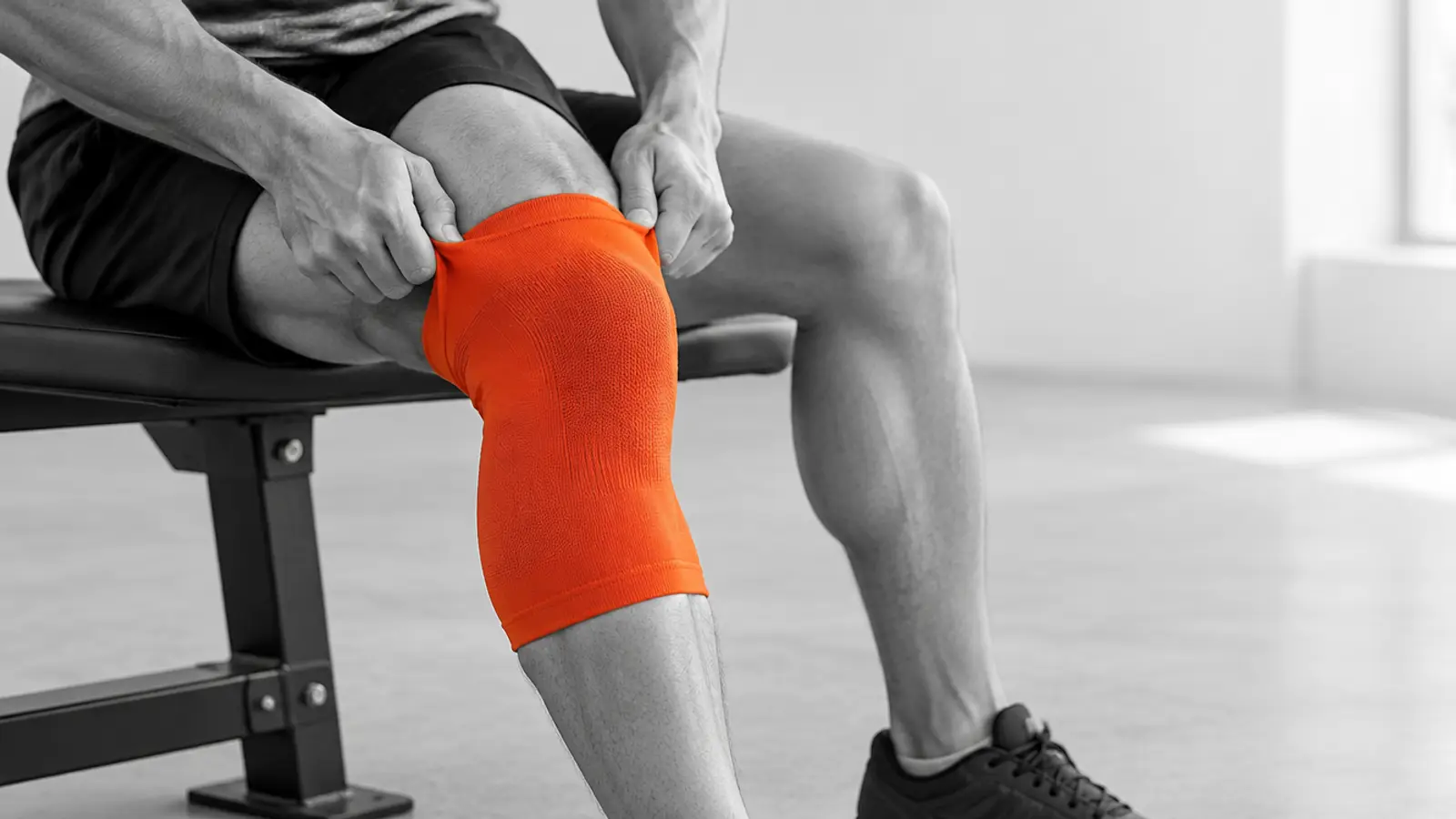
For most healthy adults, yes. HYROX training mixes running, jumping and heavy pushing, pulling and carrying, and bone responds to exactly that kind of load. Moderate running is also linked with less knee and hip arthritis, not more. This guide covers how HYROX training loads your bones, what the research says for women around menopause, whether running wrecks your knees, training with arthritis or osteoporosis, and when to be careful.
This is general information, not medical advice. If you have osteoporosis or osteopenia, a previous fracture, arthritis, a joint replacement, or joint pain that keeps coming back, talk to your doctor or a physical therapist before you start hard training.
One honest caveat first: nobody has studied bone density or joint health in HYROX athletes. Everything below comes from research on exercise in general (heavy lifting, impact work and running) and from official health bodies. HYROX training happens to include all three, which is why the evidence applies, but it's borrowed evidence.
How does HYROX training affect your bones?
It loads them, and loading is what makes bone stronger. Bone is living tissue that remodels all the time. The NIH says it responds to weight-bearing activity by building new bone. The UK's NHS singles out two kinds of exercise as particularly important for bone density:
- Weight-bearing impact, like running, skipping and jumping, where your skeleton absorbs the landing.
- Resistance training, where muscles pull hard on bones through the tendons.
The Exercise and Sports Science Australia position statement on osteoporosis puts it the same way: bone responds best to impact activities and high-intensity, progressive resistance training. Gentle, low-load exercise does much less.
Here's how that maps onto HYROX:
| Part of HYROX | Main bone stimulus | Notes |
|---|---|---|
| 8 x 1 km runs | Repeated impact through legs and hips | Steady, moderate impact |
| Burpee broad jumps | Jumping and landing | Higher impact |
| Sled push and pull | Heavy resistance through legs, hips, back | High force, no impact |
| Sandbag lunges, farmers carry | Loaded legs, spine and grip | 10 to 20 kg bag, 16 to 24 kg kettlebells in Open |
| Wall balls | Squat plus a light throw | Moderate load, lots of reps |
| SkiErg and row | Mostly cardio | Little bone stimulus |
The bone benefit comes from months of training, not race day. That matters because the NIH says most people reach peak bone mass by their mid- to late 20s. With age, bone is broken down faster than it's rebuilt, and exercise can slow that process. For the strength and balance side of aging well, see functional fitness.
HYROX vs cycling and swimming
Both are great for your heart, but the NHS notes they aren't weight-bearing. A 2012 review of 31 studies (Olmedillas, BMC Medicine) found that adult road cyclists who trained regularly often had low bone density in the lower spine, and a 2016 review reached a similar conclusion for swimming. HYROX training sits at the other end of that scale.
Can HYROX help bone density during and after menopause?
It can probably help, as long as the training includes heavy enough loads and some impact. This is where the research is most relevant. The NIH notes that women have lower peak bone mass and smaller bones than men, and that low estrogen after menopause is a risk factor for osteoporosis. In many women, the bone loss starts a year or two before menopause itself.
The trials show exercise makes a modest but real difference:
- A Cochrane review of 43 trials with 4,320 postmenopausal women (Howe, 2011) found exercise had a "relatively small" but "possibly important" effect on bone density. Progressive strength training for the legs worked best at the hip. Programs that combined several types of exercise worked best at the spine, about 3% better than control groups. The review didn't find fewer fractures, and the authors flagged that many of the studies were poorly reported.
- The LIFTMOR trial (Watson, 2018) is the one people quote. 101 postmenopausal women with low bone mass, average age 65, did 30 minutes of heavy lifting (5 sets of 5 at over 85% of their max) plus impact work, twice a week for eight months. Their spine bone density rose 2.9%, while the low-intensity home-exercise group lost 1.2%. At the hip, the lifting group held steady (+0.3%) while the control group lost 1.9%. Only one minor adverse event was reported.
What that means for HYROX: the sleds, lunges and carries give you heavy-ish loading, and running and burpee broad jumps give you impact. But typical HYROX classes favor high reps at moderate weight, while LIFTMOR used heavy sets of five. If bone health is a big reason you're training, add two shorter heavy strength sessions a week, with squats, deadlifts and overhead presses built up gradually. It helps your sled push too.
Two important points:
- LIFTMOR was closely supervised. Don't read it as permission to start heavy deadlifts alone if you've been diagnosed with osteoporosis. Get a referral to a physical therapist or qualified coach first.
- Eat enough. The International Olympic Committee's consensus on Relative Energy Deficiency in Sport (REDs) warns that long-term under-fueling harms bone. Training hard while dieting hard works against your skeleton. Missed periods are a warning sign at any age before menopause. The ESSA statement also notes that exercise for bone should go hand in hand with enough calcium and vitamin D.
For more on training through perimenopause and beyond, see our guides on HYROX for women and HYROX over 40 and 50.
Is running bad for your knees?
For most people, no. Moderate running looks good for knees. The best-known evidence is a 2017 meta-analysis of 25 studies and about 125,000 people (Alentorn-Geli, JOSPT). It found hip or knee osteoarthritis in:
- 3.5% of recreational runners
- 10.2% of sedentary, non-running people
- 13.3% of competitive, elite-level runners
Those are associations, not proof that running protects your joints, and the elite figure suggests very high volume over many years may carry some risk. Most HYROX racers are much closer to the recreational group.
What about cartilage? A 2023 meta-analysis of MRI studies (Coburn, Sports Medicine – Open) found that knee cartilage gets slightly thinner, by 0 to 5%, right after activities like walking, hopping and knee bends, then bounces back. It recovered within about 30 minutes of walking and about 90 minutes after 100 knee bends. The evidence was rated very low certainty, but the picture is of cartilage that squashes and recovers like a sponge, not one that wears away with each run.
Is HYROX bad for your joints?
Not for most people, but it does stress the knees, and that's where most HYROX injuries happen. In the only injury study in HYROX athletes (Chittenden, 2026, 89 athletes over 12 weeks), about 30% reported some health problem in a given week. Nearly three-quarters of injuries were overuse injuries, and the knee was the most commonly injured area. The knee and lower leg caused the most lost training. A previous injury looked like a risk marker for a new one.
That fits a race with 8 km of running, 100 m of lunges and 100 wall-ball squats on tired legs. The problems are usually about too much, too soon, not the movements themselves; the International Olympic Committee's consensus on training load lists rapid jumps in load as a major injury risk.
Where your joints take the most load, and how to protect them:
- Knees: sandbag lunges, wall balls, running on tired legs. Build lunge volume slowly, lower the back knee gently, and strengthen hips and quads. The sandbag lunges page and wall ball tips cover technique.
- Lower back: sled push and pull, carries. Brace and keep your spine neutral. See the sled push and pull tips.
- Shins, calves and feet: running volume and burpee broad jump landings. Increase running mileage gradually and wear suitable shoes.
- Shoulders: wall balls and the SkiErg. Warm up properly and keep your sets controlled.
Our recovery and injuries guide goes into prevention exercises and deload weeks in detail.
Can you do HYROX with knee arthritis?
Often, yes, with adjustments and your doctor's or physical therapist's blessing. Exercise is a first-line treatment for knee osteoarthritis, not something to avoid. A 2024 Cochrane review of 139 trials and nearly 12,500 people (Lawford) notes that every current international guideline recommends it. Compared with no treatment, exercise likely improved physical function and may have reduced pain, and it didn't seem to increase adverse events. Most trials had a high or unclear risk of bias, so the size of the benefit is uncertain.
That evidence is for supervised exercise programs, not racing. Practical ways to make HYROX training kinder to arthritic knees:
- Swap some running for the rower, SkiErg or bike. Two of those are HYROX stations anyway.
- Shorten lunges and wall-ball squats to a depth that's comfortable in training, and build range over time. Race standards require full depth, so be realistic about whether racing suits you yet.
- Use the 24-hour rule many physical therapists use: some discomfort during exercise is fine if it settles within a day and doesn't build up week to week.
- Consider Doubles or Relay, where you share the stations and, in Relay, the running. See HYROX divisions explained.
Can you do HYROX with osteoporosis or osteopenia?
Possibly, but get individual advice first. Impact and heavy lifting are what build bone, and they're also what need adapting when bones are fragile. The UK consensus statement on exercise for osteoporosis (Brooke-Wavell, British Journal of Sports Medicine, 2022) recommends resistance and impact exercise for most people with osteoporosis, and says the benefits of activity generally outweigh the risks. It also says:
- Avoid lots of loaded or deep spinal flexion, meaning heavy rounding of the back. The ESSA statement says the same. In HYROX, that means keeping a neutral spine on sled pulls and during burpees, and not slumping on the rower.
- If you've had a vertebral fracture or several low-trauma fractures, impact should usually stay around the level of brisk walking. Burpee broad jumps and fast running are then off the table until a specialist says otherwise.
- If you're at risk of falls, start with targeted strength and balance work.
With osteopenia (lower-than-normal bone density, but not osteoporosis), a well-coached, gradual approach may suit you well. Just make sure your coach knows your scan results.
When should you be careful?
Back off and get checked, rather than training through, if you notice:
- Bone pain that gets worse with running or jumping, especially pain you can pinpoint with one finger on the shin, foot or hip. That can be a bone stress injury, not a muscle niggle.
- A swollen, hot or locking joint, or a knee that gives way.
- Pain that's worse the next morning, or that builds up over several weeks.
- Signs of under-fueling: missed periods, frequent injuries, constant fatigue. The IOC's REDs consensus links these to bone problems.
How to train for HYROX and look after your bones and joints
The same plan can protect your bones and joints and get you race-ready:
- Lift heavy twice a week. Squats, deadlifts, lunges, rows and presses, working up to sets of about 5 to 8 reps. This is the closest match to the trials that improved bone density, and it builds the strength that protects your knees. See does HYROX build muscle? for how to fit it in.
- Keep some impact. Run regularly, and include a few short sets of jumps or burpee broad jumps. Build up slowly if you're new to them. Our burpee broad jump guide has progressions.
- Mix your cardio. Use the rower, SkiErg or bike for some of your conditioning to spread the load, while keeping enough running for race fitness. Your heart benefits either way (see HYROX and your heart).
- Increase one thing at a time, and keep weekly increases modest. Take an easier week every three to five weeks.
- Eat enough, with enough protein, calcium and vitamin D. Don't combine a hard training block with a hard diet (see HYROX and weight loss).
- Train hips, glutes and calves with split squats, step-ups and calf raises.
If you're starting from scratch, the beginner training plan builds load gradually.
FAQ
Is HYROX good for your bones?
For most people, yes. Bones get stronger in response to impact and heavy resistance, and HYROX training includes running, jumping, sleds, lunges and carries. No study has measured bone density in HYROX athletes, so the evidence comes from exercise research in general. Adding two heavy lifting sessions a week makes the stimulus stronger.
Can HYROX help prevent osteoporosis?
It may help, but it isn't a treatment on its own. Trials in postmenopausal women show strength and impact training can slow or slightly reverse bone loss, with the biggest effects from heavy, progressive lifting. Whether exercise reduces fractures is less clear.
Is HYROX good for women going through menopause?
Generally yes, as long as the training includes heavy strength work as well as cardio. Low estrogen after menopause raises osteoporosis risk, and the LIFTMOR trial showed supervised heavy lifting plus impact work increased spine bone density in postmenopausal women with low bone mass.
Is running bad for your knees?
Not for most people. A large meta-analysis found hip and knee arthritis in 3.5% of recreational runners, compared with 10.2% of non-runners. The rate was higher (13.3%) only in elite, competitive runners. Knee pain in HYROX usually comes from increasing running and lunges too quickly.
Is HYROX bad for your joints?
Not for most healthy adults, but it loads the knees heavily. In the only HYROX injury study, the knee was the most commonly injured area and most injuries were from overuse. Build lunge, wall-ball and running volume gradually and strengthen your hips and quads.
Can I do HYROX with knee arthritis?
Often, yes, with medical advice and some adjustments. Exercise is recommended by every major guideline for knee osteoarthritis and tends to improve function. Swap some running for the rower, SkiErg or bike, and consider Doubles or Relay to share the load.
Can I do HYROX with osteoporosis?
Possibly, with individual advice. UK consensus guidance recommends strength and impact exercise for most people with osteoporosis, but advises avoiding heavily loaded spinal flexion. People with vertebral or multiple fractures should usually keep impact to brisk-walking level. A physical therapist can tell you which stations to adapt.
Which HYROX stations are best for bone health?
The ones with high force or impact: sled push, sled pull, sandbag lunges, farmers carry and burpee broad jumps, plus the running. The rower and SkiErg are great cardio but load your bones much less, much like cycling and swimming.
Next steps
Read the full picture in the benefits of HYROX, protect your knees with the recovery and injuries guide, and when your training is on track, pick a date from the race calendar.