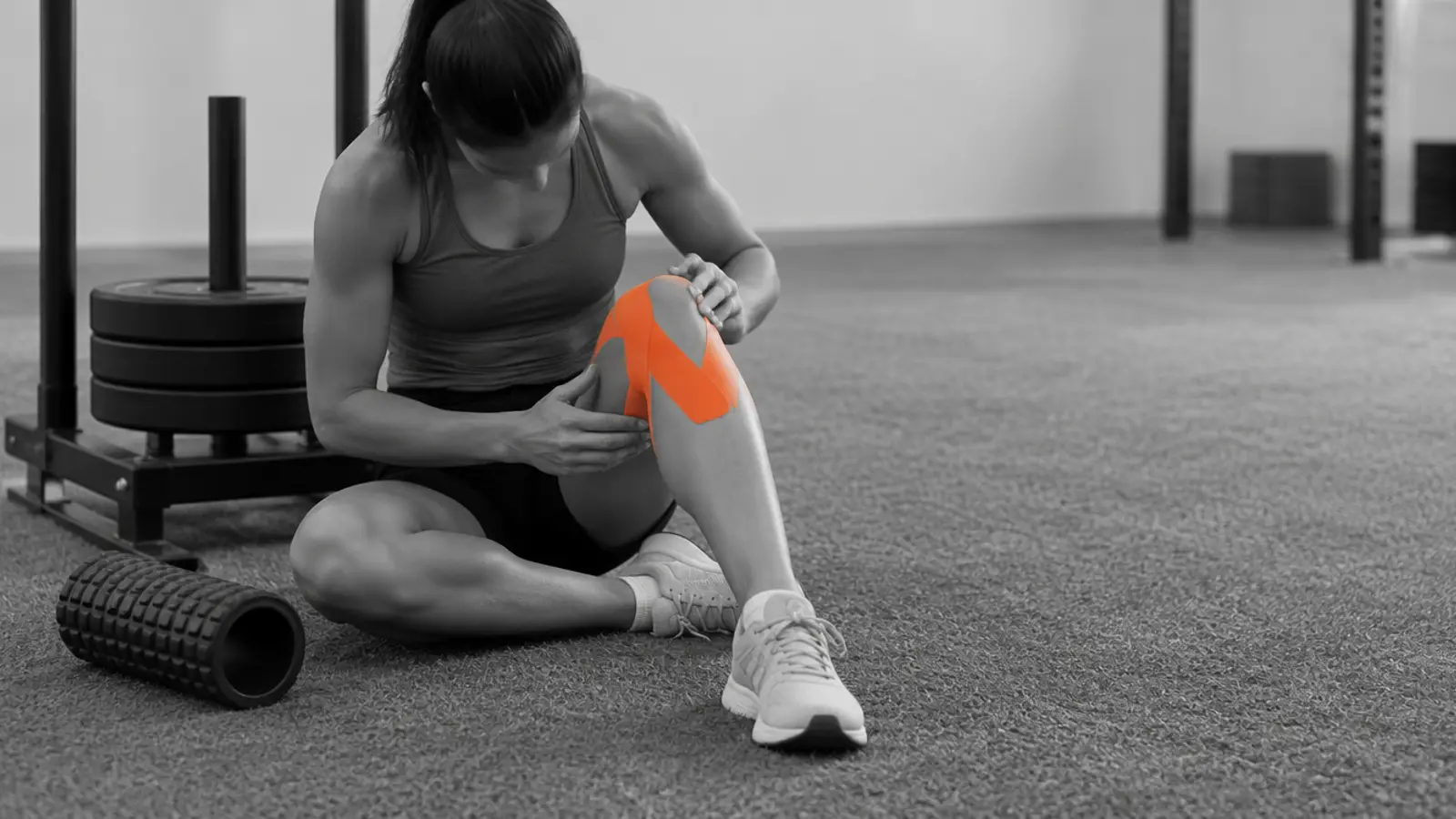
Most HYROX injuries are slow-building overuse problems, not accidents. The first HYROX injury studies, both from 2026, point to the same short list: front-of-knee pain, lower back pain, shin, calf and Achilles problems, hip and groin strains, and foot pain, with tendon problems the most common type. Running is the activity people blame most, followed by sandbag lunges and other station work.
Free tool
HYROX race fuel planner
Carb-load, race-morning meal and race fuel
Five habits prevent most of them:
- Build up gradually. No big jumps in running distance, lunge meters or wall-ball reps from one week, or one session, to the next.
- Strength train twice a week, covering calves, hips, hamstrings and trunk. It has the best evidence of any prevention method.
- Practice stations at lower volume first, before stringing them together at race volume on tired legs.
- Recover on purpose: sleep, take an easier week every few weeks and space out your races.
- Deal with niggles early. Change the session when something first complains, rather than training through it for weeks.
Below, each injury gets the same treatment: what it feels like, what causes it, who's at risk, how to prevent it and when to get it checked. Then there's a 15 to 20-minute prehab routine and a section on load.
This is general information, not medical advice. If pain is sharp, keeps getting worse, changes how you move, wakes you at night or hasn't eased after a week or two, see a physiotherapist or doctor. Symptoms that need urgent care are listed under red flags.
What does the research say about HYROX injuries?
HYROX research is new and thin, so treat any single number with caution.
| Study | Who | Main findings |
|---|---|---|
| University of Bath, prospective cohort (Frontiers, 2026) | 89 athletes tracked weekly for 12 weeks | 14.4 health problems per 1,000 training hours, 6.4 that stopped training. 73% overuse. Knee most common (22%); lower leg and Achilles the most severe. |
| TUM Munich, online survey (medRxiv preprint, 2026, not yet peer reviewed) | 418 athletes, 30 countries | About half recalled a HYROX-related injury in the past year. Knee, back, lower leg, and hip and groin most affected (chart below). Tendon problems 42%. More HYROX sessions per week was the only factor linked to injury. |
The two rates differ mainly because the studies count injuries differently. For context, reviews of CrossFit-style training put injury rates at roughly 2 to 3 per 1,000 hours, similar to weightlifting.
Why does HYROX injure people?
HYROX isn't unusually dangerous, but it stacks several stresses:
- Running on fatigued legs. Seven of the eight 1 km runs start straight off a station, and tired muscles pass more force to tendons and bone.
- High-rep, deep-knee stations. 100 m of sandbag lunges, 100 wall balls and 80 m of burpee broad jumps load the kneecap and its tendon over and over.
- Heavy sleds on grippy turf, which load the lower back, calves and Achilles, especially as form breaks down.
- Volume jumps when people start. Fitness improves faster than tendons adapt.
- Too little recovery, and racing or simulating too often. The IOC's consensus on load and injury names rapid load spikes as a major risk factor.
Knee pain at the front of the knee (patellofemoral pain)
Feels like: a dull ache around or behind the kneecap, worse on stairs (especially going down), deep squats, lunges, kneeling or after sitting with bent knees.
Caused by: sandbag lunges, wall-ball squats, broad-jump landings and running on tired legs. It was the most-reported area in both HYROX studies.
At risk: anyone who has just ramped up lunge or squat volume. In one study of military cadets, women developed it at about twice the rate of men.
Prevention: international consensus statements recommend combining hip- and knee-focused strength work:
- split squats or step-downs, 3 × 8–10 per leg
- side-lying hip abduction or banded side steps, 2 × 15
- glute bridges, 3 × 10–12
Lower your back knee gently in lunges rather than dropping onto it, keep the front knee roughly over your toes, and build from 25 to 50 m of sandbag lunges up to 100 m over several weeks.
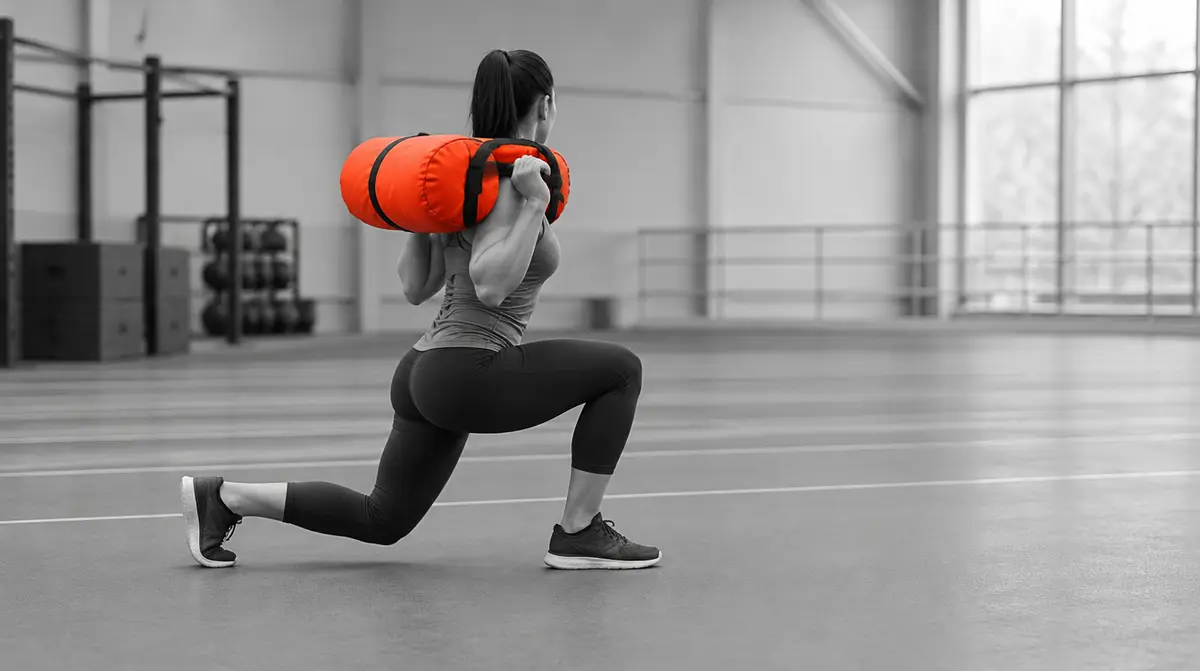
The station tips and burpee broad jump guide cover lunge and landing technique.
Get it checked if it lasts beyond two or three weeks of reduced load, or the knee swells, locks or gives way.
Patellar tendinopathy ("jumper's knee")
Feels like: pain at one point just below the kneecap. It often hurts at the start of a session, eases once you're warm, then returns worse later or the next morning.
Caused by: jumping and landing, deep loaded squats (wall balls, lunges) and sudden increases in either.
At risk: people adding jump or squat volume quickly, heavier athletes and anyone who has had it before.
Prevention and early management: tendons respond to load, not rest. In a Danish trial, slow heavy strength work (leg press or split squats, 3 seconds up and 3 down, 3 to 4 sets of 6 to 15 reps, three times a week) worked at least as well as eccentric decline squats, and the gains lasted, unlike those from a steroid injection. Some people find long holds, such as a Spanish squat or wall sit (4 to 5 × 30–45 s), ease pain before training. Cut jump volume while it's irritable, then rebuild.
Get it checked if the tendon is sore at the start of every session after a few weeks of modified training. Tendinopathy often takes months, and a physio can set the loading plan.
Lower back pain
Feels like: a muscular ache or tightness across the lower back during or after sleds, rowing or lunges, sometimes with stiffness the next morning.
Caused by: rounding or sagging on the sled push and pull, a collapsed posture on long rows, and lunges once your trunk tires.
At risk: people moving to race-weight sleds too fast, anyone whose trunk fatigues early, and people with previous back pain.
Prevention: a 2016 meta-analysis found exercise reduced the short-term risk of low back pain, while back belts and insoles did not.
- side planks, 3 × 20–40 s per side
- dead bugs or bird dogs, 2 × 8–10 per side
- Romanian deadlifts or hip thrusts, 3 × 8
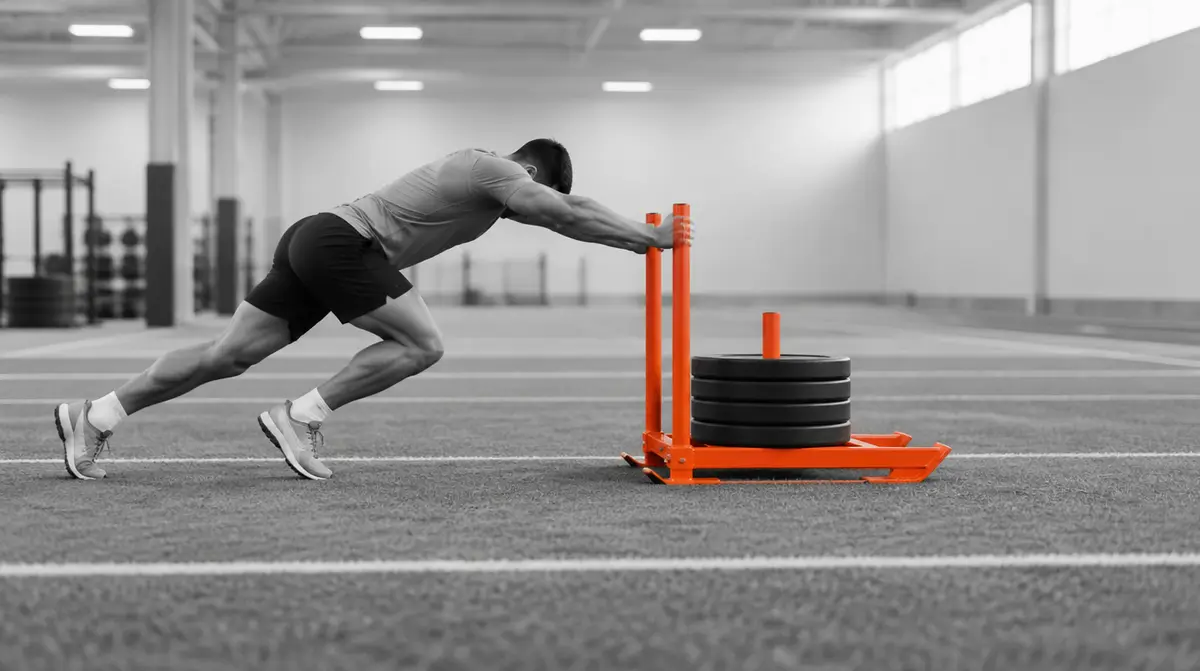
On the sled push, keep a straight line from head to hips and drive with your legs. On the pull, sit back with a braced trunk and pull hand over hand. The sled push and pull guide has the details. Row legs first, then body, then arms. Do heavy sled work fresh before you add it to tired circuits.
Get it checked if pain spreads below the knee, comes with numbness, tingling or weakness, or hasn't improved within a couple of weeks.
Shin splints (medial tibial stress syndrome) and bone stress
Feels like: a spread-out ache along the inner edge of the shinbone, often worst at the start of a run.
Caused by: running volume and frequency rising too fast, plus repeated jumping.
At risk: a 2015 meta-analysis linked it to female sex, higher body weight, a previous running injury and flatter feet. Newer runners are also at risk.
Prevention: no specific method is proven. The best bets are steady running progression (see load management), calf raises (3 × 15) and tibialis raises against a wall (2 × 15–20), with runs spread across the week. Rotate and replace worn shoes; see the shoes guide.
Get it checked if the pain is in one small, very tender spot, hurts when you hop, aches at rest or at night, or keeps getting worse. Those point to a possible bone stress injury, and early stress fractures often don't show on an X-ray.
Calf strains and Achilles tendinopathy
Feels like: a calf strain is a sudden grab mid-run or on push-off, as if you'd been kicked. Achilles tendinopathy is pain and stiffness above the heel, worst in the first steps of the morning or the start of a run.
Caused by: running straight off the sled push on exhausted calves, pushing on the balls of your feet, broad jumps and running spikes. In the Bath study, lower leg and Achilles problems were the most severe.
At risk: a 2017 review found older age and a previous calf strain were the strongest predictors.
Prevention:
- straight-knee and bent-knee calf raises, 3 × 12–15 slowly, progressing to single leg and then weighted (the bent-knee version trains the soleus, which takes very high loads when you run)
- pogo hops or skipping, 2–3 × 20 s, once calf raises are easy
- sled-to-run practice in small doses, such as a short push then an easy 200 to 400 m
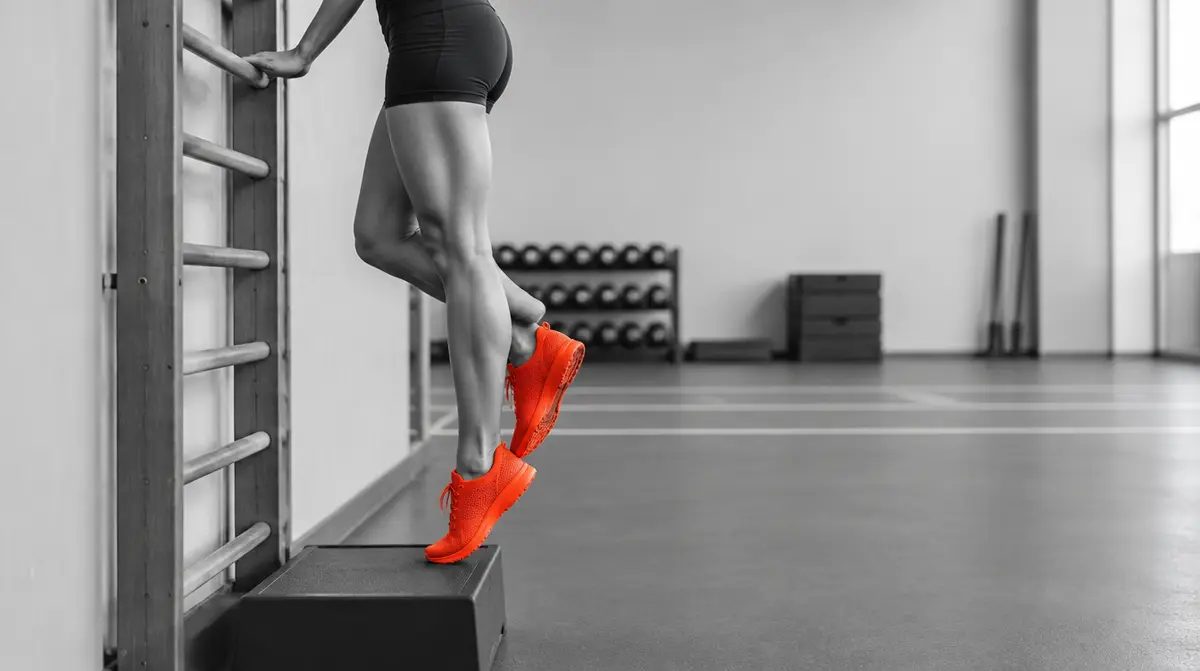
If the Achilles flares, keep loading it within limits. In a Swedish trial, people who kept running and jumping within a pain-monitoring rule did as well as those who rested, and current physio guidelines center on progressive tendon loading.
Plantar heel pain (plantar fasciitis)
Feels like: sharp pain under the heel with your first steps in the morning or after sitting, easing as you move.
Caused by: running increases, long spells on your toes (sled push) and worn or unfamiliar shoes.
At risk: people on their feet all day, those with stiff calves or quick running increases, and heavier athletes.
Prevention: the 2023 physio guideline recommends strengthening the foot and ankle. A practical option from a 2015 trial is a heel raise on a step with a rolled towel under your toes: 3 seconds up, 2-second hold, 3 seconds down, about 3 × 12 every other day, adding load as it gets easy.
Get it checked if it lasts more than a few weeks despite changes, or comes with numbness, burning or swelling.
Hamstring strains
Feels like: sudden, sharp pain in the back of the thigh, usually running fast or hinging under load.
Caused by: fast running when tired, yanking with straight legs on the sled pull, and sprint finishes.
At risk: a 2020 meta-analysis of more than 70,000 athletes found older age and a previous hamstring strain were the strongest risk factors. A recent strain raised the risk almost fivefold.
Prevention: in a 2019 meta-analysis, programs including Nordic hamstring curls roughly halved hamstring injuries, mostly in team sports. A later reappraisal judged that less certain, but the exercise is cheap and low risk. Start with 2 × 3–5 slow Nordics once or twice a week, plus Romanian deadlifts (3 × 8). Expect soreness for the first week or two.
Get it checked if you felt a pop, can't walk normally or have heavy bruising.
Shoulder pain
Feels like: an ache at the front or side of the shoulder when throwing overhead or pulling.
Caused by: high-rep wall balls thrown with the arms instead of the legs, long SkiErg intervals and the sled pull. Shoulders feature less in HYROX data than in CrossFit, probably because there's no kipping or overhead lifting.
Prevention: a shoulder warm-up program cut shoulder problems in elite handball players (17% versus 23% over a season). Include band external rotations (2 × 12–15), scapular push-ups (2 × 10) and Y-T raises (2 × 8–10). Drive wall balls with your hips and legs (see the wall balls guide), and hinge into the SkiErg instead of pulling with your arms.
Get it checked if you have night pain, weakness, pain lifting your arm sideways or a shoulder that feels unstable.
Wrist, forearm, elbow and grip
Feels like: sore wrists from burpees, and forearm burn or elbow pain from the 200 m farmers carry, the sled rope and the SkiErg. Elbow problems were the third-biggest burden in the Bath study, though from only a few cases.
Prevention: build grip gradually with carries and dead hangs (2 × 20–40 s), add wrist curls and reverse wrist curls (2 × 15), and do wrist rocks on all fours before burpees. Hold firmly but don't crush, and put the kettlebells down briefly rather than gripping to failure.
Get it checked if pain lingers at rest or your fingers go numb or tingle.
Hip flexor and groin (adductor) strains
Feels like: pain at the front of the hip or in the groin when lifting your knee or lunging.
Caused by: long lunging, broad jumps, the sled push and fast running. Hip and groin made up 11% to 13% of HYROX injuries.
Prevention: the Copenhagen adduction exercise cut groin problems by about 40% in a trial in footballers. Start with the short-lever version (knee on a bench) for 2 × 15–30 s per side, two or three times a week, and add banded knee drives (2 × 10–12) for the hip flexors.
Get it checked if it doesn't settle with rest, hurts when you cough or the hip catches painfully.
Skin: abrasions, rope burn and blisters
- Sandbag: wear a top that covers your neck and shoulders, and practice carrying the bag in training.
- Sled rope: pull hand over hand rather than letting the rope slide through your palms. Check what grip aids are allowed in the rules guide.
- Knees: your back knee touches the floor on every lunge, so lower it with control.
- Blisters: race in shoes and socks you've trained in, and tape known hot spots. A 2017 review found little strong evidence for any blister method, but moderate support for paper tape.
See someone if a wound shows signs of infection: spreading redness, heat, pus or fever.
Cramp, heat, overdrinking and rhabdomyolysis
Cramp usually hits late, in heavily used muscles. Research points more to neuromuscular fatigue than to dehydration or low salt, though that's still debated. The best prevention is being fit for the distance and pacing sensibly. If it hits, stretch gently and keep moving slowly.
Heat and overdrinking. Indoor venues can be warm and humid. Drink to thirst, and don't force down large volumes "just in case": the international consensus on exercise-associated hyponatremia (low blood sodium) names drinking well beyond thirst as the main cause. Our race nutrition guide covers fluids.
Rhabdomyolysis is serious muscle breakdown, and it's rare. Case reports from high-intensity functional training mostly involve beginners or people returning after a break who did a sudden, very high-volume session, often with lots of lunges or squats. Build volume up over weeks.
A 15–20 minute prehab routine
Do this two or three times a week, after an easy run, as part of a strength session or on its own. Start at the lighter end of each range.
| Exercise | Sets × reps | Mainly protects |
|---|---|---|
| Straight-knee calf raise (single leg when able) | 3 × 12–15, slow | Calf, Achilles, foot |
| Bent-knee calf raise (soleus) | 2 × 15 | Calf, Achilles, shins |
| Tibialis raise (back against a wall) | 2 × 15–20 | Shins |
| Split squat or slow step-down | 3 × 8–10 per leg | Knees |
| Nordic hamstring curl (or bridge walk-outs) | 2 × 3–6 | Hamstrings |
| Copenhagen adduction, short lever | 2 × 15–30 s per side | Groin |
| Side plank | 2 × 20–40 s per side | Lower back |
| Band external rotation + scapular push-up | 2 × 12–15 each | Shoulders |
| Dead hang or wrist rocks | 2 × 20–40 s | Grip, wrists, elbows |
If you're prone to heel pain, swap in the towel-under-toes heel raise. If an exercise hurts your problem area beyond mild discomfort, drop it and ask a physio for an alternative. The doses are a typical physio-style prescription based on the trials above, not a HYROX-tested program. Our guide on how to train for HYROX shows where strength work fits in your week.
How do I manage training load to avoid injury?
Most HYROX injuries are load problems, so this matters more than any single exercise.
- ~10%longer than your longest run of the past 30 days: where injury risk rose
- 3–6 weeksbetween deload weeks
- 4–6 weeksat least, between all-out races
- Watch single sessions, not just weeks. A 2025 study of more than 5,000 runners found injury risk rose when one run was more than about 10% longer than the longest run of the previous 30 days. The familiar "10% a week" rule has weak evidence, but avoiding sudden jumps is well supported.
- Count station volume like mileage. Track lunge meters, wall-ball reps and broad-jump meters each week, and increase them in small steps.
- Change one thing at a time. Don't add a new class, more running and heavier sleds in the same week.
- Deload every three to six weeks, cutting volume by roughly a third to a half.
- Space out races and full simulations, with at least four to six weeks between all-out races. Our recovery and injuries guide has the recovery timelines and race-spacing advice.
- Use a niggle rule. If something hurts more than mildly or is worse the next morning, reduce that movement for a few days and swap in something pain-free.
Use our race day planner to plan the final days so you arrive fresh.
Are masters athletes or women at higher risk?
The HYROX studies so far found no clear link between injury and age or sex, but they were small. Wider sports research adds a few points.
Masters (40+). Older age is among the strongest risk factors for calf and hamstring strains, and tendons adapt more slowly than heart and lungs. Prioritize calf strength and steady running progression, warm up longer before fast running and keep hard days apart. Our HYROX over 40 guide covers recovery and strength.
Women appear more prone to front-of-knee pain, and female sex is a risk factor for shin splints, so hip and knee strength and gradual running progression are especially worthwhile. Underfueling (REDs) raises the risk of bone stress injuries, so missed periods, frequent injuries or constant fatigue are reasons to see a doctor. After pregnancy, get a pelvic health check before returning to running and jumping. See HYROX for women.
Red flags: when to get help quickly
Get urgent medical help for:
- chest pain, fainting or palpitations during exercise
- dark urine with severe muscle pain
- confusion, vomiting or collapse in the heat
- back pain with loss of bladder or bowel control, or numbness around the groin
- a sudden "pop" with inability to push off or bear weight
See a doctor or physio soon for pain that is sharp, in one bony spot, present at rest or at night, getting worse week to week, or that comes with swelling, numbness, tingling or weakness.
FAQ
What is the most common HYROX injury?
Knee pain, at about one in five injuries in both HYROX studies published so far. It's usually front-of-knee or patellar tendon pain linked to lunges, wall balls, broad jumps and running on tired legs. Back, lower leg, hip and groin problems follow.
Is HYROX bad for your knees?
Not for most people who build up gradually. Problems usually come from rapid increases in lunge, squat or jump volume. Hip and knee strength work, controlled lunges and steady progression lower the risk. If you already have a knee problem, talk to a physio before you start.
Should I train through pain?
Mild discomfort (about 3 out of 10 or less) that settles by the next morning is usually fine, especially with tendon problems. Sharp pain, pain that changes how you move or pain that's worse the next day means modify or stop that movement.
Do Nordic curls prevent hamstring injuries?
In team sports, programs that included them roughly halved hamstring strains, though a later reappraisal judged the effect less certain. They're cheap and safe: start with 2 sets of 3 to 5 slow reps once or twice a week.
Does stretching prevent HYROX injuries?
Not much, on current evidence. A meta-analysis of 25 trials found stretching didn't reduce sports injuries, while strength training cut them to about a third. Stretch if it helps you feel loose, but put your prevention time into strength and load management.
What should I do if my Achilles hurts after HYROX training?
Cut back running, jumping and sled pushing for a few days, but keep loading the tendon with calf raises within mild discomfort. A sudden pop or weakness pushing off needs same-day assessment. Pain lasting more than a couple of weeks is worth a physio visit.
Can HYROX cause rhabdomyolysis?
It's rare, but any sudden, very high-volume session can cause it, especially in beginners or people returning from a break. Build lunge and wall-ball volume over weeks. Severe muscle pain with weakness, swelling or dark urine needs urgent care.
How do I prevent injuries while training for HYROX?
Most HYROX injuries are slow-building overuse problems, and five habits prevent most of them. Build up gradually, with no big jumps in running distance, lunge meters or wall-ball reps. Strength train twice a week, covering calves, hips, hamstrings and trunk. Practice stations at lower volume before stringing them together at race volume. Recover on purpose with sleep, an easier week every few weeks and spaced-out races. And deal with niggles early instead of training through them for weeks.
Next steps
For post-race recovery timelines, race spacing and deloads, read the recovery and injuries guide. Tighten technique on the riskiest stations with the sled push and pull, wall balls and burpee broad jump guides, and fit the prehab routine into your week with how to train for HYROX. As race day nears, plan your final days with the race day planner.
About the author
Tim Grassin, Founder of RoxSkin. Tim founded RoxSkin to help amateur HYROX athletes get sponsored. He races HYROX himself as an amateur, and checks each guide against the sources listed at the end before it goes live.
Sources
The pages we checked this guide against, last on October 20, 2026. Spotted something out of date? Email us.
- frontiersin.org/journals/sports-and-active-living/articles/10.…
- medrxiv.org/content/10.64898/2026.08.09.26359590v1.full
- germanjournalsportsmedicine.com/archive/archive-2021/issue-7/musculoskeletal-i…
- revistas.usp.br/fpusp/en/article/view/148280
- bjsm.bmj.com/content/48/11/871
- bjsm.bmj.com/content/50/17/1030
- blogs.bmj.com/bjsm
- vbn.aau.dk/da/publications/excessive-progression-in-weekl…
- runsafe.au.dk/display/artikel/limited-evidence-on-changes-in…
- repub.eur.nl/pub/97316/REPUB_97316-OA.pdf
- pure.eur.nl/en/publications/2018-consensus-statement-on-ex…
- pmc.ncbi.nlm.nih.gov/articles/pmid/20466469
- train.fitness/personal-trainer-blogs/heavy-slow-resistance-t…
- search.pedro.org.au/search-results/record-detail/18389
- apta.org/patient-care/evidence-based-practice-resources…
- pubmed.ncbi.nlm.nih.gov/38037331
- bjsm.bmj.com/content/49/6/362
- gloshospitals.nhs.uk/your-visit/patient-information-leaflets/caring…
- bjsm.bmj.com/content/51/16/1189
- bjsm.bmj.com/content/54/18/1081
- bjsm.bmj.com/content/53/21/1362
- physio-network.com/research-reviews/thigh/why-methods-matter-in-a…
- bjsm.bmj.com/content/53/3/150
- bjsm.bmj.com/content/51/14/1073
- outdoormedicine.org/prevention-of-blisters
- pubmed.ncbi.nlm.nih.gov/18981039
- bjsm.bmj.com/content/49/22/1432.abstract
- ncbi.nlm.nih.gov/pmc/articles/PMC7872485
Racing soon? Get sponsored for it.
Scan your body, list up to 15 spots, let brands sponsor your race. Free for athletes.
Get my avatar →